Symbols of Unity
Last night, at our final Inquirers Class before the bishop’s visit, we returned to a familiar topic—what holds us together as Episcopalians. In almost every session, the subject has come up. During the first class, when we focused on the ethos of our tradition, I mentioned how our history as Anglicans and as products of the English Reformation shaped our understanding of unity. Although I did not lead the classes on history, scripture, ministry, prayer, or worship, I suspect, in one way or another, those conversation touched on the same theme.
In our peculiar, Episcopal way of being Christians, we believe that unity starts with common prayer. Rather than ask all Episcopalians to agree on matters of doctrine—like what specifically happens to the bread and wine during the Eucharist or how Jesus’s death on the cross is efficacious for us—we start with unity in worship. Throughout The Episcopal Church—in every state, nation, and territory in which Episcopalians worship—we all use the same prayer book, lectionary, and supplemental resources, all of which have been authorized for public worship by our governing bodies.
That does not mean, however, that worship feels the same in every church. Every congregation has its own character. Our closest parish neighbor is St. Thomas in Springdale, and their style differs slightly from ours. Even within our own congregation and among our clergy, there are differences in liturgical practice, which you can see and hear every Sunday.
Similarly, we do not agree on all matters of doctrine. Some congregations are more conservative than others. Some place more emphasis on the cross, while others prefer to focus on the empty tomb. Some believe that the daily mass is the most important way to promote spiritual growth, and others rely on extended expository preaching, preferring to celebrate Holy Communion only once a month. Although I know that my clergy colleagues and I agree on most points of theology, I suspect that we differ in significant and important ways. The fact that I am not sure how we would disagree proves the point that we are held together by a different sort of unity than unity of opinion.
In truth, The Episcopal Church is a diverse body within an even more diverse denomination, yet we are held together not by the pretense of consensus on all points of belief but by a fundamental commitment to shared worship—to common prayer. There are essential points of faith that are reflected in our liturgies (e.g. the Bible, the Apostles’ Creed, the Nicene Creed, and the Baptismal Covenant), and there are other teachings of faith that can be derived from our liturgical texts (e.g. infant baptism, the presence of Christ in the consecrated bread and wine of Holy Eucharist, the validity of women’s ordination, and marriage equality), but the only litmus test for full participation in the life of our church is your willingness to join us for worship as prescribed by the Book of Common Prayer and our other authorized liturgical texts.
As a result, in The Episcopal Church, the role of bishops as symbols of unity is different from that in other traditions, and I would argue that our understanding aligns more closely with that of the ancient church than those of many of its contemporary manifestations. Bishops have always been important, visible, active means for promoting and maintaining unity in the church. During the first few centuries of Christianity, when tradition and custom governed the operation of the church, bishops were responsible for passing those traditions on through their teaching, preaching, and writing and also by raising up, ordaining, and (sometimes) disciplining clergy.
Different liturgical and theological traditions were present in the different geographical regions of the church. Each diocese had its own bishop, who shared in the distinctive charisms of their local Christians, yet they also shared in the governance of the wider church. More of a loose confederation than a strict top-down hierarchy, the early church found ways to distinguish between essential points of agreement and adiaphorous or non-essential matters. Bishops were responsible for maintaining catholicity—the connections of universality that link all Christians together—within their diocese and for recognizing the ways in which their own distinct traditions conformed or challenged that unity.
These days, in many denominations, bishops have become enforcers of officially sanctioned dogma, quashing heresy in order to prevent schism before it takes root. While there is still latitude in how bishops interpret and apply canon law, most traditions look to bishops to guard the unity of the church by enforcing orthodoxy. In our tradition, however, despite their identity as guardians of unity, the ministry of a bishop has less to do with requiring unanimity and more to do with helping individuals and congregations recognize and celebrate the ways that they are linked with the universal, catholic church through common prayer.
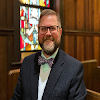
This Sunday, Bishop Harmon will be with us to help us remember that we are part of something much bigger than St. Paul’s in Fayetteville. Because he is a successor of the apostles and because his role is to participate in the councils of the wider church, he helps us live into our identity as catholic Christians. Even when he is not physically present at St. Paul’s, he is the “ordinary” of the diocese—the one whose ministry as preacher and presider in liturgy constitutes the ordinary practices of the Diocese of Arkansas—which means that, even when absent, his leadership informs our worship.
We could not continue to function as a constituent member of The Episcopal Church and, more generally, of catholic Christianity without a bishop who links us to the wider church. What makes us Episcopalians is our commitment to common prayer, and our bishop, by virtue of his office, is the one through whom that pattern of common prayer is established and maintained. In effect, although we do not need Bishop Harmon to tell us how to follow the rubrics in the Book of Common Prayer, we would have no way of recognizing that our conformity to those rubrics was significant and identity-establishing without our connection to the wider church, which is only possible through our bishop.
In The Episcopal Church, only bishops can confirm or receive someone into the church. If confirmation were simply an opportunity for an adult Christian to confirm the promises that their parents and godparents made on their behalf at their baptism, we could take care of that all on our own. But being confirmed is about more than accepting the Christian faith for oneself. It is about taking your place in the wider church and seeking the help of the Holy Spirit to maintain our presence and participation in the life of the church. Bishops, as those through whom the Holy Spirit is given and as the symbols of our unity with all Christians, are the ones who help us know that we belong to something bigger—both as individuals and as a congregation—and this Sunday will be a chance for us to experience that again.
Bishop Harmon will preach and preside at 7:30am, 8:45am, and 11:00am this Sunday. We will still have the 9:00am service in the Parish Hall, but the bishop will not be able to be at that service. Bishop Harmon will also lead the Adult Forum at 10:00am and will join us for a reception after the 11:00am service. For those who are being baptized, confirmed, or received, this is an opportunity to know that they are a part of the universal church because our bishop has served as a link between them and all Christians around the world. For the rest of us, being with Bishop Harmon gives us the chance to see how our way of being Christians, which starts with our worship, is connected with the wider church.
Because he serves as the bishop of every Episcopal parish in Arkansas, Bishop Harmon is a reminder of our unity. He embodies the liturgical tradition that holds us together. He is the bishop of the most conservative Episcopalians in the state just as much as he is the bishop of the most progressive Episcopalians. To be our bishop, we do not need to agree with him or with each other about anything except our commitment to common prayer. That we will continue to worship (mostly) in our own distinct style when he is with us is a testament to our ability to be one with each other despite our differences. He may only be with us at St. Paul’s once a year, but his continued presence throughout the diocese Sunday after Sunday is a symbol of the church’s unity. Thankfully, we get to see it in person this Sunday.
Yours faithfully,
Evan D. Garner