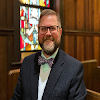
Your life tells a story. What kind of story does it tell? Some of us have lived lives worthy of a fairytale, but most of us have experienced substantial bumps along the way. Real lives tell real stories—stories of hardship and perseverance, of frustration and recovery, of confusion and clarity. As a member of our church community, your story is part of a bigger tale of God’s love and salvation. You are an integral part of the community of faith—the family of God—and that means that the story of God’s goodness defeating evil and love triumphing over hate is your story, too.
Sometimes we tell the stories of our lives with words, describing for others the twists and turns our path has taken, but more often we communicate the significance of our journey in unspoken ways. When we are at our best—when we are conscious of the limitless love that God has for us and the ways that love has grounded us within the community of the redeemed—we carry ourselves a little more radiantly—not with an air of superiority but with confidence in the one whose promise to love us and save us can never be defeated. In that way, our very souls declare the wonders of God.
I learned the other day that the text of one of my favorite hymns was written by an alumnus of Ridley Hall, where I also went to seminary. I cannot recall anyone at Ridely mentioning Timothy Dudley-Smith by name, but that may be because his paraphrase of Mary’s Magnificat, “Tell Out My Soul,” is more popular among those who identify with the catholic side of the Anglican tradition.
Did you know that there are two settings of “Tell Out My Soul” in our hymnal? The one we sing more often is Woodlands (#438 in Hymnal 1982). Every once in a while we sing Birmingham (#437), which I also enjoy, but Woodlands is so good that, whenever the lectionary invites us to sing Dudley-Smith’s lyrics, it is hard to pass it up. I wonder whether you can hear either or both in your mind without needing to look up a YouTube video to refresh your memory.
During the month of October, we will sing the Woodlands version as the Communion hymn on Sunday mornings at 8:45 and 11:00, and we will also sing it at the 9:00 service on October 26. Although Mary’s song is appropriate at any time, we normally wait for the lectionary to give us a particular occasion to sing it, but this time we are singing “Tell Out My Soul” because that is the theme of this year’s annual giving campaign.
Over the next few weeks, we will talk a lot about the stewardship of our financial resources as a way for us to proclaim the story of salvation in our lives. I will preach about it at least once and will talk about it during the announcements. Some volunteers will share their own stories of how they have experienced stewardship as a way to express their faith in God and God’s love. On September 26, which will be our Celebration Sunday, you will have the opportunity to proclaim with your own proportional, sacrificial, first-fruits gift the wonders of God’s love.
Every year, we use the annual giving campaign as an opportunity to express and deepen our faith through giving. Stewardship is, first and foremost, a spiritual practice. I do not believe that the size of your financial gift has anything to do with how much God will bless you in the coming year. That is a perversion of the gospel, and it has no place in the Christian tradition. But I do believe that the act of making a significant gift of your financial resources back to God is a spiritual discipline that, like intentional prayer or habitual worship, deepens your experience of God’s love and shapes your life in ways that proclaim that love to others.
Between now and October 26, I hope you will take some time to think of the ways in which your life tells out the glory of God and God’s salvation. How do you use the life God has given you—all of your resources—to proclaim God’s love to the world? On Celebration Sunday, I will invite you to commit a proportional, first-fruits, sacrificial gift of your income to support God’s work in the world in 2026 as a way of letting your soul sing of God’s greatness.
Whatever your pattern of giving has been in the past, I hope you will look for ways to grow. If you have never given anything to the church, start with something small but substantial—like $25 a month. If you have been giving a certain amount every year without considering what portion of your resources that gift represents, consider moving to a proportional gift of 2%, 3%, or 5% of your income. If you have been a consistent percentage giver, grow toward a tithe—the 10% standard of giving established in scripture. And, if you have experience giving the first 10% of your income to God, prayerfully consider whether you can grow beyond the tithe.
Remember, your financial gifts provide a way to draw your heart more deeply into the work that God is doing in your life and in the world around you. Although St. Paul’s is grateful for your generosity, the church may not be the only place where you take part in God’s work. You should share your resources with the other organizations and programs through which your life proclaims the goodness of God.
Everyone is invited to Celebration Sunday. We will serve a festive brunch, which this year will be prepared by our own Grace Cleghorn. At all four services, we will celebrate God’s love for the world in Jesus Christ, and, as we do every week, we will respond to that love by offering ourselves back to God. On that Sunday, though, our self-offering will also include our response to the annual giving campaign. We will distribute estimate of giving cards and invite households to place them on the altar as an act of faithful commitment. And we will sing Mary’s song as a reminder that our lives are a part of God’s story of salvation.
If you have not yet responded to the invitation to Celebration Sunday, please do so here: https://tinyurl.com/STPAULSFAY-CELEBRATION2025. If you are not able to join us, don’t worry: we will reach out to you after Celebration Sunday and invite you to turn in your estimate of giving card. And, if you are not a member of St. Paul’s, we hope this process will help you respond to God’s goodness by prayerfully consider how you will give to other entities.
In the Magnificat, Mary praises God for God’s great reversal of the powers of the world, which is accomplished in the incarnation of Jesus Christ, the savior of the world who grew inside her. Of the sure and certain work of God both prefigured and already taking place within her body, Mary sang, “God has cast down the mighty from their thrones and has lifted up the lowly,” or, as Dudley-Smith put it, “Powers and dominions lay their glory by…the hungry fed, the humble lifted high.”
Stewardship is itself an act of humility—of giving up power, control, and wealth—in order that God’s greatness might be magnified by our further availability for God. That is the consistent message of stewardship, and I hope you will celebrate it with us this year.
Yours faithfully,
Evan D. Garner